
About
Philosophy as a working discipline
Not a retreat from the world, but a more precise way of moving through it.
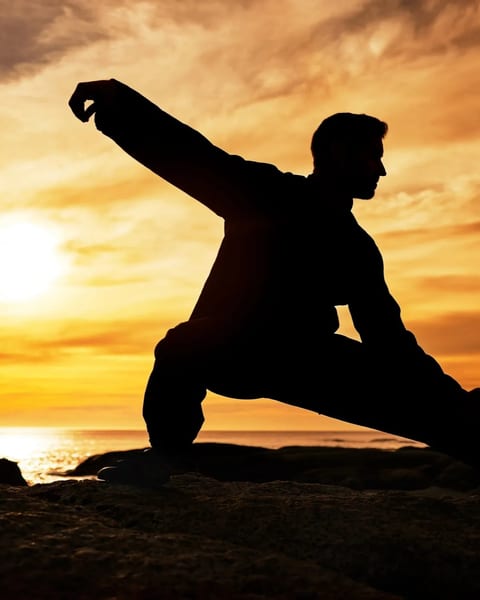
Let’s establish the ground rules first: I am not a philosopher, a monk, or an academic. I have no interest in debating the theoretical theology of ancient texts, arguing over historical translations, or pretending to be a spiritual guru. I approach Taoism strictly as a practical toolset. This site is simply a collection of tools that I use to navigate the friction of everyday life.
I write and teaches from the conviction that the oldest wisdom is often the most precise — that the questions Laozi was asking about power, clarity, and right action are the same questions serious people face today, and that the answers hold up.
The approach
Rooted in the classical texts
Every principle here traces back to a primary source — the Tao Te Ching, the Zhuangzi, the Liezi, or the internal martial canon. The goal is not to paraphrase ancient wisdom but to understand it precisely enough to apply it.
Applied, not academic
Taoist philosophy is not a subject to be studied at a distance. It is a set of disciplines to be practised under real conditions — in decisions, in relationships, in the management of attention and energy.
Simplicity as rigour
The Taoist tradition is suspicious of complexity for its own sake. The aim is always to find the simplest, most direct formulation of a principle — and then to test it against experience until it either holds or breaks.
Background
My name is Dany Longval, and my exposure to this toolset didn't begin in a classroom; it began in training. At sixteen years old, while studying Wun Hop Kuen Do, we were required to memorize a weekly philosophical passage of the Tao Te Ching. That discipline sparked a curiosity that drove me to read the full classical texts for the first time. But reading classical texts only takes you so far. It is the real-world application that makes these principles modern and alive. Over the decades that followed, my understanding evolved through a deep, lived immersion into the culture. Part of that came from the physical sweat of traditional Chinese martial arts, specifically Praying Mantis Kung Fu and Chen style Tai Chi, where you quickly learn that yielding and structure aren't abstract theories—they are leverage and survival. Part of it came from dozens of trips to China, observing the society and its artifacts firsthand. But most importantly, it comes from living it daily. Sharing my life with my wife—who was born and grew up in China—and being deeply integrated with her family and our community of Chinese friends has turned this philosophy from a text on a page into an everyday reality.
This lived reality maps flawlessly onto my professional life. From co-founding and successfully exiting a tech startup in the nineties, to spending decades in executive leadership steering commercial strategy, the challenges of business life are relentless. As an engineer, I understand the cold, objective math of complex systems, but my career progression toward business leadership and executive management relied on something deeper. It relied on a Taoist mindset.
Living that mindset eventually requires aligning your environment with it. That is why my own path led away from dense corporate centers to the shores of Georgian Bay, and why this site carries a beach theme. When you step away from the concrete and stand by the water, this philosophy stops being a concept and becomes something you can watch in real time. Water is the ultimate Taoist teacher—it yields to everything, yet over time, it shapes the stone. Living immersed in this natural environment is a daily, physical reminder of how unforced flow actually works.
Why this site exists
Most writing about Taoism falls into one of two traps. It is either so academic that it becomes inaccessible — a debate about translations and historical context that never touches the ground — or so diluted that it becomes a vague invitation to "go with the flow," stripped of any real precision or demand.
This site is an attempt at a third path. I recognize that not everyone has had the opportunity to be exposed to Taoist concepts the way I was. Most people never get the chance to learn the physical mechanics of yielding through decades of martial arts, or to understand the philosophy by integrating into a Chinese family. For most people, Taoism is never presented as anything more than abstract poetry or a motivational quote. My hope is that by sharing the practical, everyday toolkit that has helped me, it might help you navigate the friction in your own life. Whether you are dealing with a difficult person, an unexpected crisis, or just the chaos of a busy morning, the underlying mechanics never change. This site is simply my way of passing on these tools and stories, in the hope that they help your daily life flow instead of fracture.
There is no product to sell, no course to enrol in, no community to join. Just the work of thinking carefully about old ideas and seeing whether they hold up.
"The Tao that can be told is not the eternal Tao."
Tao Te Ching, chapter 1
Read the foundational essays
Four essays on the disciplines that matter most — written for those who lead, think, and seek to act from genuine clarity.
Browse essays